How to Create a Detailed Travel Itinerary for a Week-Long Trip (Step-by-Step)
Travel planning experts building AI tools for group travel.
Quick Answer
To create a detailed travel itinerary, define your goals, research your destination, build a day-by-day plan with activities and transport, and use an AI tool like WanderWith to generate and refine your itinerary automatically.
A well-crafted travel itinerary is the backbone of any successful trip. Whether you're planning a relaxing beach holiday, an adventurous trek, or a cultural exploration, having a detailed day-by-day plan ensures you make the most of every moment. In this guide, we'll walk you through exactly how to create a detailed travel itinerary for a week-long trip - from initial research to final packing.
Step 1: Choose Your Destination & Define Trip Goals
Before diving into logistics, ask yourself these key questions:
- What kind of experience do I want? - Adventure, relaxation, culture, food, or a mix?
- What's my budget? - This determines accommodation, dining, and activity choices.
- Who am I travelling with? - Solo travel planning differs vastly from group trip planning.
- What's the best season? - Weather can make or break a trip.
Pro tip: Use WanderWith's AI trip planner to get instant destination suggestions based on your preferences, budget, and travel dates.
Step 2: Research Your Destination Thoroughly
Deep research is what separates a good trip from a great one. Here's what to research:
- Top attractions - Must-see landmarks, museums, natural wonders
- Hidden gems - Off-the-beaten-path spots that guidebooks miss
- Local food - Signature dishes, best restaurants, street food hotspots
- Transport options - Local buses, metro, ride-sharing, rental cars
- Cultural norms - Dress codes, tipping etiquette, local customs
- Safety information - Safe neighbourhoods, emergency numbers, health precautions
Step 3: Create a Day-by-Day Framework
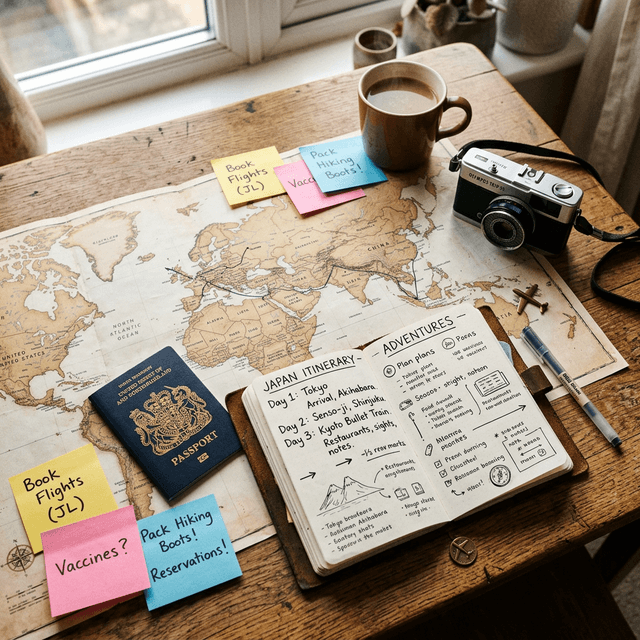
Now comes the exciting part - building your day-by-day itinerary. Here's a proven framework for a 7-day trip:
Day 1: Arrival & Orientation
- Arrive and check into accommodation
- Walk around the local neighbourhood
- Visit a nearby market or café to absorb the vibe
- Light sightseeing - save energy for the days ahead
Days 2–5: Core Exploration
- Dedicate each day to a theme: history, nature, food, adventure
- Schedule 2–3 major activities per day (don't over-pack)
- Include meal breaks at recommended local restaurants
- Factor in travel time between attractions
Day 6: Flexible & Unique Experiences
- Revisit favourite spots or explore areas you missed
- Book a local experience - cooking class, guided tour, boat ride
- Shopping for souvenirs
Day 7: Departure Day
- Visit a morning market or café for a final local experience
- Pack and check out
- Head to the airport/station with buffer time
Step 4: Budget Planning & Expense Tracking
Break your budget into these categories:
- Accommodation - 30-40% of your budget
- Transport - 15-20% (flights, trains, local travel)
- Food & Dining - 20-25%
- Activities & Experiences - 15-20%
- Emergency Fund - Always keep 10% as a buffer
Apps like WanderWith include built-in budget tracking features that let you split expenses with your group and track spending in real time.
Step 5: Book Accommodation & Transport
Once your itinerary framework is ready, lock in bookings:
- Book flights/trains first - These have the most price volatility.
- Reserve accommodation - Choose locations central to your planned activities.
- Pre-book popular activities - Guided tours, museum tickets, and adventure sports often sell out.
- Arrange airport transfers - Pre-booking saves stress on arrival.
Step 6: Prepare a Packing List
Your packing list should align with your itinerary. Consider:
- Weather-appropriate clothing for each day
- Activity-specific gear (hiking shoes, swimwear, formal wear)
- Travel essentials (passport, chargers, adapters, medications)
- A printed copy of your itinerary as backup
Tools to Help You Create the Perfect Itinerary
- WanderWith - AI-powered trip planner with group collaboration and budget tracking.
- Google Sheets - For custom spreadsheet-based itineraries.
- Google Maps - Save locations and create custom maps with pinned attractions.
- Notion - For detailed, template-based travel planning.
Conclusion
Creating a detailed travel itinerary transforms your week-long trip from chaotic to magical. Follow these steps - define goals, research deeply, build a day-by-day framework, plan your budget, book essentials, and pack smart. Use tools like WanderWith to speed up the process with AI and make collaborative planning effortless. Happy travels!
Continue Exploring
Frequently Asked Questions
Plan your next trip smarter
WanderWith is an AI-powered travel planning app designed for collaborative trip planning. Generate itineraries, track budgets, and coordinate with friends - all in one place.